
- Subgroup of
-
-
WAC CFD Academy
Almost all technological and natural phenomena in the world involve in transport of mass, energy,... View more
Organizer:
- Organized by
-
-
Public Group
Public Group
Active a day ago
Almost all technological and natural phenomena in the world involve in transport of mass, energy,... View more
Public Group

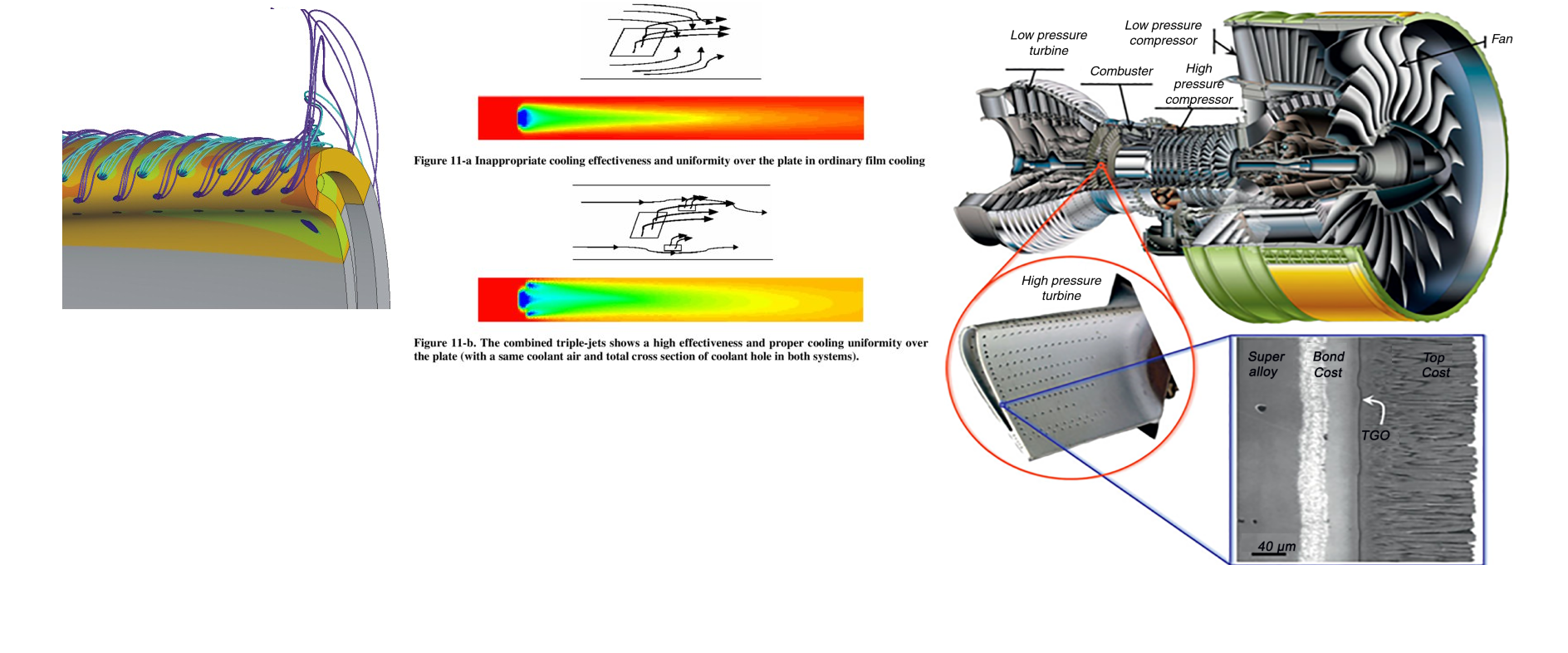
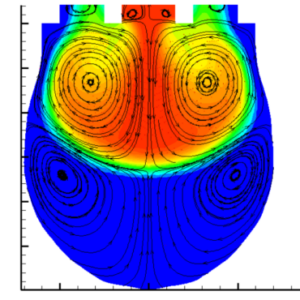
Almost all technological and natural phenomena in the world involve in transport of mass, energy, and momentum in 3D space. In absence of the exact solutions for theoretical modeling of the most practical cases with complex geometry and boundary conditions, Computational Fluid Dynamics (CFD) simulations, are important part of many research works in different fields of fundamental sciences, engineering, chemical processes, biomedical topics, natural and environmental phenomena. Design and optimization of the propulsion systems and aerodynamics for aircrafts and vehicles, analysis of the air and water flow inside equipment and around the buildings, unite operations in multiphase processes in industrial equipment for mixing, separation, adsorption, extraction, cooling of electronic devices, simulation of blood flow and respiratory mechanics in the human body, are among numerous examples which can be better understood, designed and optimized by CFD simulations. Reliable CFD simulations with efficient post processing can provide us amazing process visualization as “CFD Laboratories” for many practical cases for which we can perform limited experimental studies with high costs and time consuming.
However, despite vast capabilities and applications of CFD simulations for numerous research works, practically, still there are innumerous cases for which CFD simulations can be extended to achieve new insights, if we have relevant computational facilities, software and the required skills to apply.
World-Academies CFD Simulations group is developing conceptual CFD courses, workshops and step-by-step training programs to increase the CFD knowledge of many researchers in different fields, who know the general basis of the material and energy balance and simplified forms of the Navier–Stokes equations for their research works, however not enough familiar with CFD knowledge and tools for practical computational simulations. According to our recent initiated collaboration with SimScale platform as the pioneer of the advanced online CFD Simulations platform that provides the required computational power, tools and software on cloud via novel web-browsers facilities, accessible worldwide for high performance computational simulations, economically and fast, we hope that via this WAC working group you can bring in reality your wishes to extend your current projects and future works via CFD Simulations towards practical process design, optimization, products developments and new publications.

The Navier-Stockes equations derivation assume that they are supported in a continuum domain. You can know more about that size based on the Knudsen number (https://en.m.wikipedia.org/wiki/Knudsen_number#:~:text=The%20Knudsen%20number%20(Kn)%20is,a%20body%20in%20a%20fluid.)

There was a problem reporting this post.
Please confirm you want to block this member.
You will no longer be able to:
Please note: This action will also remove this member from your connections and send a report to the site admin. Please allow a few minutes for this process to complete.